September 18, 2026

4
min read
Data Discovery for GDPR: Ensuring Personal Data Compliance
Learn how GDPR data discovery helps organizations identify, classify, and protect sensitive data across SaaS, cloud, AI, and endpoints with Strac.
· GDPR data discovery helps organizationsautomatically locate, classify, and monitor personal data across SaaSapplications, cloud environments, databases, endpoints, browsers, and AI tools.
· Continuous data discovery is essential in2026, as sensitive data is constantly created, shared, and moved acrosscollaboration platforms and generative AI applications.
· Data discovery alone isn't enough—combiningit with Data Loss Prevention (DLP) enables organizations to automaticallyredact, block, quarantine, or encrypt sensitive data before it is exposed.
· AI-powered discovery uses machinelearning, OCR, and content-aware analysis to identify sensitive informationmore accurately than traditional regex-based approaches, reducing falsepositives.
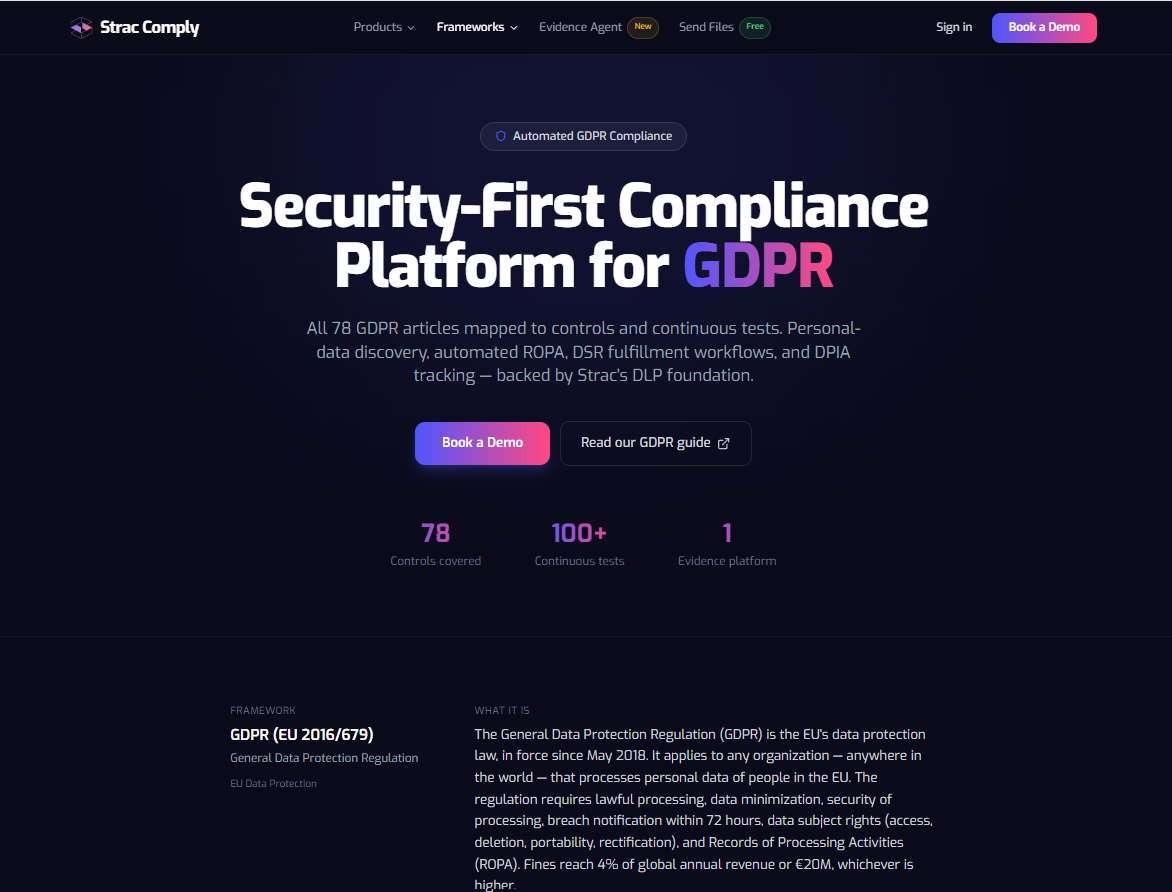
· Strac unifies Data Discovery, DSPM, and DLPin a single agentless platform, helping organizations continuously discover,classify, and protect sensitive data while supporting GDPR, HIPAA, PCI DSS, andother compliance requirements.
As organizations embrace AI, SaaS applications, and cloud-first operations, sensitive data is spreading faster than ever before. Customer records, financial information, intellectual property, and regulated data now move continuously across collaboration tools, cloud storage, browsers, endpoints, and AI assistants. This makes understanding where sensitive data lives (and how it moves) more important than ever.
For organizations subject to the General Data Protection Regulation (GDPR), data discovery is the foundation of compliance. Before you can protect personal data, respond to data subject requests, or enforce retention policies, you first need complete visibility into where that data exists across your environment.
In this guide, we'll explore why modern data discovery is essential for GDPR compliance, how it helps organizations reduce security risk, and what capabilities to look for in a data discovery solution that can continuously identify, classify, and protect sensitive information across today's cloud and AI-driven workplace.
Data discovery is the process of finding and classifying sensitive data wherever it lives, across SaaS apps, cloud storage, databases, endpoints, browsers, and AI tools. It's the starting point for any security or compliance program, because you can't protect data you don't know you have.
The problem is that data rarely stays put. People copy files, paste customer details into Slack, upload spreadsheets to ChatGPT, and share folders "just for now." Before long, sensitive data sits in places security teams never check.
GDPR assumes you know what personal data you hold, where it lives, and who can see it. Without that knowledge you can't keep an accurate data map, answer an access or deletion request completely, or show an auditor you're compliant. Data discovery for GDPR provides the inventory all of that depends on.
Older data discovery tools ran a scan once a quarter and handed you a report. Modern tools work continuously. They classify data automatically, flag new exposures as they happen, and show you what's actually risky. Paired with DLP, they also fix the problem by redacting, revoking access, or blocking a share before the data leaks.
Data discovery isn't a checkbox. It's how you keep track of your data as it moves.
The section is now about half its old length. It keeps the snippet-ready definition and the "data discovery," "data discovery for GDPR" and "data discovery tools" keywords. I replaced the abstract wording with real examples like Slack and ChatGPT, and cut it to three links.

Managing personal data under the General Data Protection Regulation (GDPR) requires much more than simply storing data securely. Organizations must understand what personal data they collect, where it resides, who has access to it, how it is processed, and how it moves across increasingly complex environments that now include SaaS applications, cloud infrastructure, browsers, endpoints, and AI tools.
The GDPR establishes several core principles that organizations must follow throughout the entire lifecycle of personal data.
Lawfulness, Fairness and Transparency
Organizations must process personal data lawfully and clearly communicate how that data is collected, used and protected.
Purpose Limitation
Personal data should only be collected for legitimate business purposes and should not be reused in ways that are incompatible with those original purposes.
Data Minimization
Organizations should collect only the personal data necessary to accomplish a specific business objective, reducing unnecessary exposure and compliance risk.
Accuracy
Personal data must remain accurate and up to date. Organizations should have processes for correcting or deleting inaccurate information when necessary.
Storage Limitation
Personal data should only be retained for as long as it is required. Retention policies help reduce unnecessary risk while supporting GDPR compliance.
Integrity and Confidentiality
Appropriate technical and organizational controls should protect personal data against unauthorized access, accidental disclosure, alteration, or loss.
Meeting GDPR requirements requires both governance and technology. Organizations should establish processes that support continuous compliance, including:
Rather than treating GDPR as a one-time compliance exercise, organizations should adopt continuous visibility into their data environment, allowing them to identify new risks as business systems evolve.
As organizations generate and store increasing amounts of data across cloud platforms, collaboration tools and AI applications, manually tracking sensitive information is no longer practical. Modern data discovery solutions automate this process, giving security teams continuous visibility into where regulated and business-critical data exists.

Automatically Discover Sensitive Data
Modern discovery tools continuously scan SaaS applications, cloud storage, databases, endpoints and AI platforms to identify personal and regulated data without requiring manual effort.
Classify Data Accurately
Using machine learning, OCR and content-aware analysis, modern solutions classify sensitive information such as PII, PHI, PCI, financial records, source code and intellectual property with greater accuracy than traditional pattern matching alone.
Support Continuous GDPR Compliance
Data discovery provides an up-to-date inventory of personal data, making it easier to demonstrate compliance, respond to audits and fulfill data subject requests.
Prioritize Security Risks
Rather than simply listing where data exists, advanced discovery solutions provide context about where sensitive information is overexposed, improperly shared or stored outside approved systems.
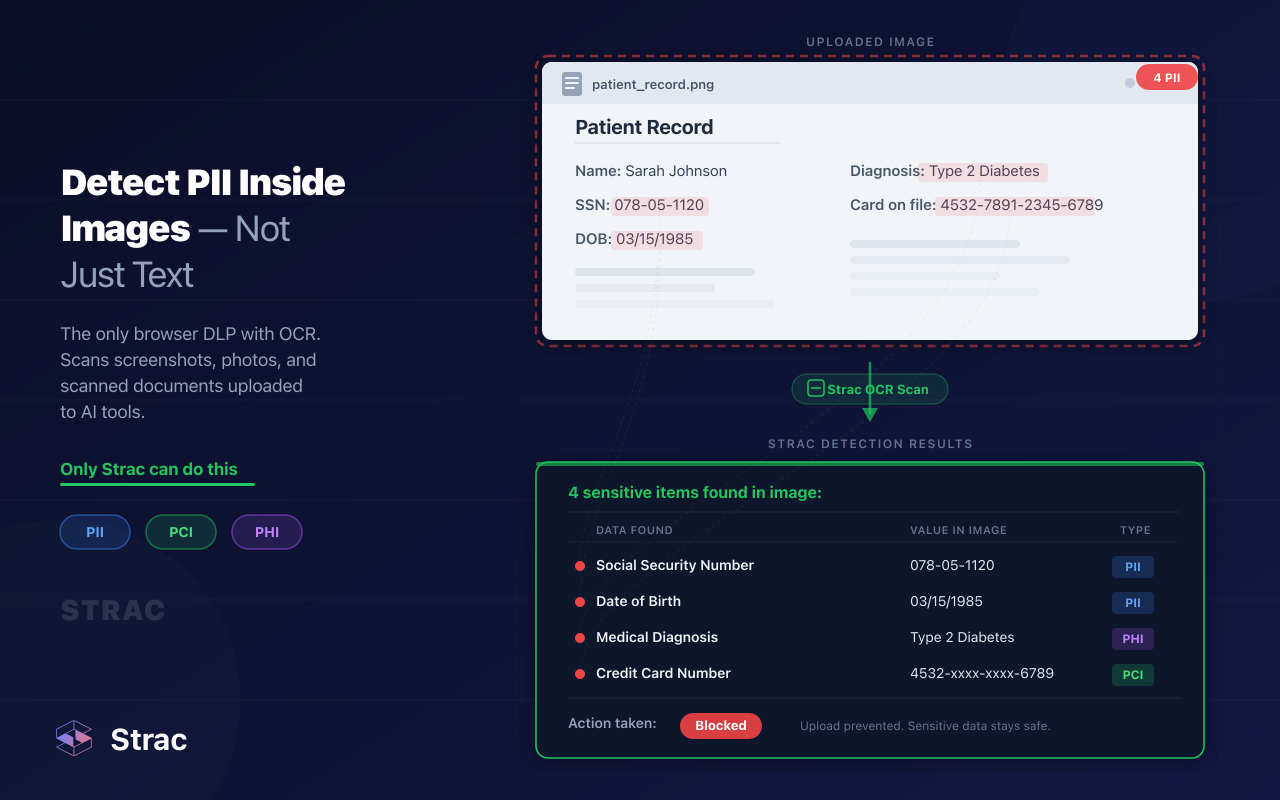
Today's discovery platforms combine multiple detection methods to improve both accuracy and coverage.
AI and Machine Learning
Machine learning models understand the context surrounding sensitive information, significantly reducing false positives compared to traditional rule-based approaches.
OCR for Images and Documents
Optical Character Recognition (OCR) enables organizations to detect sensitive information embedded within screenshots, PDFs, scanned documents and images.
Content-Aware Detection
Rather than relying solely on keywords or regular expressions, content-aware analysis evaluates the meaning and context of information to improve classification accuracy.
Manual data discovery simply cannot keep pace with modern organizations. Employees continuously create, upload and share sensitive information across dozens of SaaS applications and AI assistants every day.
Automated discovery provides continuous visibility into changing data environments while reducing manual effort and improving consistency. When combined with Data Loss Prevention (DLP), organizations can move beyond simply finding sensitive information and automatically prevent it from being exposed through real-time policy enforcement.
Finding sensitive data is no longer enough. In 2026, organizations need to know where sensitive data lives, who can access it, how it's being used, and stop risky actions before data leaves the organization.
Strac combines Data Security Posture Management (DSPM) and Data Loss Prevention (DLP) into a single agentless platform that continuously discovers, classifies, monitors, and protects sensitive data across your entire modern data estate—including SaaS applications, cloud infrastructure, AI tools, browsers, endpoints, email, and MCP-enabled environments.
Unlike traditional discovery tools that generate static reports, Strac continuously monitors data movement and applies real-time remediation whenever sensitive information is exposed.
Strac automatically discovers regulated and proprietary data across:
This provides security teams with a continuously updated inventory of where sensitive data exists—not just where they expect it to be.
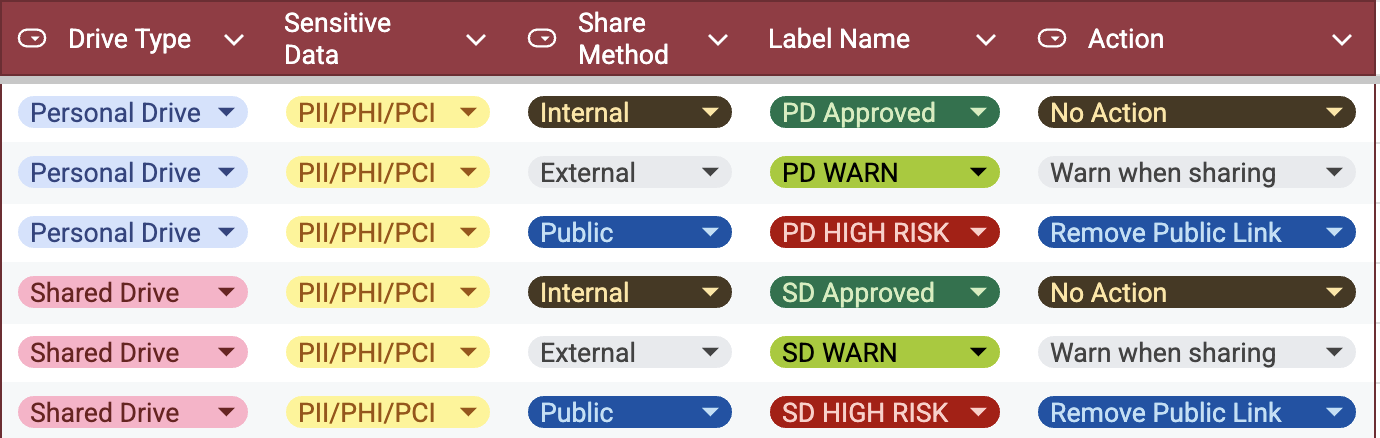
Rather than relying solely on regex rules, Strac uses machine learning, OCR and content-aware detection to identify:
This significantly reduces false positives while improving detection across structured, unstructured and image-based content.

Discovery is only valuable if action follows.
When sensitive information is detected, Strac can automatically:
Whether an employee uploads a customer spreadsheet to an AI assistant, pastes credentials into Slack, or shares regulated data through a SaaS application, Strac can enforce policies instantly before data is exposed.
Most organizations deploy separate tools for discovering sensitive data and preventing leaks.
Strac unifies both capabilities in one platform, allowing security teams to:
The result is less tool sprawl, faster deployment, and significantly stronger protection across modern SaaS, cloud and AI environments.
Strac helps organizations support GDPR, HIPAA, PCI DSS 4.0, SOC 2 and other regulatory frameworks through continuous data discovery, automated classification, policy enforcement and comprehensive audit trails.
Instead of discovering sensitive data once during an audit, organizations maintain continuous visibility into where regulated data exists and how it is being protected.
GDPR compliance begins with knowing where your sensitive data lives—but in today's AI-first workplace, visibility alone isn't enough. Organizations need continuous discovery, intelligent classification, and real-time protection across SaaS applications, cloud infrastructure, endpoints, browsers, and AI workflows.
Strac delivers all of these capabilities through a single agentless platform that combines Data Discovery, DSPM, and DLP. By automatically discovering sensitive data, accurately classifying it with AI-powered detection, and preventing data leaks through inline remediation, Strac helps organizations reduce risk, simplify compliance, and confidently protect sensitive information wherever it moves.

Discovery is step one; for the platforms that run the full program, compare GDPR compliance software.
GDPR data discovery is the process of automatically locating, classifying and monitoring personal data across SaaS applications, cloud environments, databases, endpoints and AI tools. It enables organizations to understand where regulated data exists so they can apply appropriate security controls and meet GDPR requirements.
Modern data constantly moves between cloud applications, collaboration tools and AI platforms. Continuous discovery keeps your data inventory current by automatically detecting new sensitive information as it is created, uploaded or shared, helping organizations maintain ongoing compliance instead of relying on outdated scan results.
Data discovery identifies where sensitive information exists, but by itself it does not stop leaks. When combined with Data Loss Prevention (DLP), organizations can automatically redact, block, quarantine or encrypt sensitive data before it is exposed. Platforms like Strac combine discovery and DLP into a single solution.
AI-powered data discovery uses machine learning, OCR and context-aware analysis to identify sensitive information beyond simple keyword or regex matching. This improves detection accuracy, reduces false positives and enables organizations to discover sensitive data hidden within documents, images, support tickets and AI conversations.
The best GDPR data discovery solutions should provide continuous discovery, automated classification, AI-powered detection, real-time remediation, SaaS and cloud coverage, browser and endpoint visibility, AI application protection, audit reporting and support for compliance frameworks such as GDPR, HIPAA, PCI DSS and SOC 2. A unified DSPM and DLP platform helps organizations reduce complexity while improving security.
.avif)


.gif)


.webp)