Strac: A Comprehensive DLP Solution for PCI DSS Compliance
Ensure PCI DSS compliance with Strac DLP. Protect sensitive payment data, prevent breaches, and maintain regulatory standards effortlessly. Learn how Strac can secure your business and streamline compliance with our comprehensive data loss prevention tools
Strac is a comprehensive solution for businesses striving for PCI DLP compliance.
It offers broad channel integration across SaaS, Cloud and endpoints, proactive data scanning, intelligent data redaction, and high accuracy.
Strac's DLP aligns with various requirements of PCI DSS, including discovering and cataloging cardholder data, ensuring safe data transmission, granular access control, and real-time monitoring and reporting.
It protects stored cardholder data, redacts sensitive information, encrypts data during transmission, and provides access control and monitoring.
Strac's DLP is a vital tool for businesses to confidently approach PCI DSS compliance.
Data flows incessantly across networks, systems, and devices in our hyper-connected world. This continuous flow, while ensuring operational efficiency and customer satisfaction, also exposes businesses to heightened risks of data breaches. As cyber threats become more sophisticated, the challenge for businesses to safeguard their sensitive information intensifies. Among the plethora of data protection tools available, Data Loss Prevention (DLP) has emerged as a cornerstone in the cybersecurity strategy of many organizations.
For businesses that deal with sensitive financial data, and especially those that need to adhere to the Payment Card Industry Data Security Standard (PCI DSS), the role of DLP is pivotal. Strac, with its unique SaaS/Cloud DLP solution, is redefining the way businesses approach PCI DSS compliance.
In this extensive exploration, we will dissect how Strac's DLP offers a holistic and robust framework for businesses striving for PCI DSS compliance, ensuring that their cardholder data remains shielded from both internal and external threats.
✨ The Evolving Landscape of Data Security
Before delving into the specifics of Strac's DLP, it's essential to understand the current data security landscape. The digital transformation has led to an explosion in the volume of data generated, processed, and stored by businesses. From customer databases to transaction records, companies are awash with data that cybercriminals covet.
The increasing number of high-profile data breaches in recent years underscores the urgency for businesses to fortify their data security posture. Regulatory bodies worldwide have responded by introducing stringent data protection regulations, with PCI DSS being a notable standard for any entity that handles cardholder data.
Understanding PCI-DSS Data Protection Requirements
To meet PCI-DSS data protection requirements, organizations need strong controls that protect cardholder data wherever it exists; across systems, applications, and everyday workflows. A DLP solution for PCI-DSS compliance helps teams automatically discover, classify, and monitor payment data across cloud platforms, SaaS tools, emails, and internal systems; reducing the risk of accidental exposure or data leaks.
PCI-DSS outlines 12 core security requirements designed to protect payment card data. The most relevant PCI-DSS data protection requirements include:
Requirement 3: Protect Stored Cardholder Data – Organizations must identify, classify, and securely store cardholder data such as PAN.
Requirement 7: Restrict Access to Cardholder Data – Access to sensitive PCI data must be limited to authorized personnel.
Requirement 10: Track and Monitor Access to Cardholder Data – Businesses must log and monitor who accesses cardholder data.
Requirement 11: Regularly Test Security Systems and Processes – Security controls must be regularly tested to ensure payment data remains protected.
PCI-DSS compliance is not just about blocking data movement; organizations must continuously discover, monitor, and protect cardholder data across their entire environment.
✨ Strac: PCI DLP Solution
What sets Strac apart from traditional DLP solutions is its forward-thinking approach, tailored for today's multi-faceted business ecosystems. With operations spanning various platforms and communication channels, modern businesses require a DLP solution that seamlessly integrates without causing operational disruptions.
Key Features that Elevate Strac's DLP:
Strac DLP
Broad Channel Integration (SaaS, Cloud, Endpoint): In an era where businesses use a mix of communication tools ranging from email to platforms like Slack and Zendesk, Strac's ability to integrate across these channels ensures that no data slips through the cracks.
Proactive Data Scanning: Strac doesn't wait for threats to manifest. Its proactive scanning mechanism continuously scours through vast amounts of data, identifying and flagging sensitive information, ensuring that businesses are always ahead in their data protection efforts.
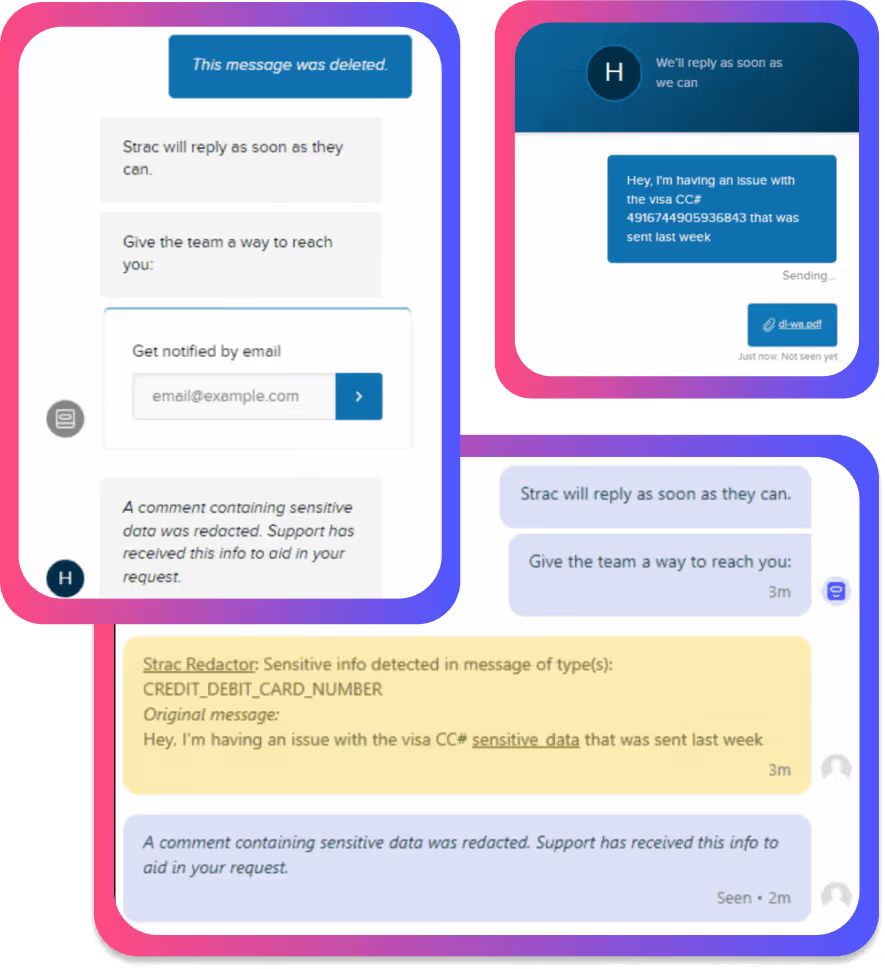
Intelligent Data Redaction: Strac offers advanced redaction capabilities beyond flagging sensitive data. This ensures that sensitive information is automatically redacted even when documents need to be shared, eliminating the risk of unintentional data exposure.
High Accuracy: Strac's machine learning models are highly trained for sensitive data elements and documents of any format. Check out all sensitive data elements Strac supports, including PCI, here: https://www.strac.io/blog/strac-catalog-of-sensitive-data-elements
✨Deep Dive: Strac's Role in PCI DSS Compliance or PCI DLP
Strac Slack DLP
PCI DSS compliance implicitly demands the rigorous data protection capabilities that DLP solutions offer. Here's a detailed look at how Strac's DLP aligns with the various requirements of PCI DSS:
Discovering and Cataloging Cardholder Data: At the heart of PCI DSS compliance is knowing where cardholder data resides. Strac's automated scanning capabilities delve deep into a business's digital assets, ensuring that every piece of sensitive data is identified and cataloged.
Ensuring Safe Data Transmission: With data moving across various channels, there's a constant risk of it being intercepted during transit. Strac monitors all data transfers, encrypting sensitive information and ensuring it remains inaccessible even if intercepted.
Granular Access Control: Not everyone in an organization needs access to cardholder data. Strac allows businesses to set up intricate access controls, ensuring that only authorized personnel can access sensitive data.
Real-time Monitoring and Reporting: Compliance isn't a one-off task. It requires continuous monitoring. Strac's real-time monitoring ensures that any unauthorized access or data movement is instantly flagged, and stakeholders are alerted. This not only aids in rapid incident response but also provides valuable data for compliance audits.
✨Strac's DLP and Specific PCI DSS Requirements:
Protection of Stored Cardholder Data: Data at rest is as vulnerable as data in transit. Strac's content discovery tools scan every nook and cranny of a business's digital infrastructure, identifying where sensitive data is stored. Once identified, businesses can apply the necessary encryption and access controls, ensuring that the data remains impervious to breaches.
Redact Cardholder Data: Section 3.2 of PCI-DSS explicitly states that credit card information must always be either masked or redacted. This implies that even if you don't directly store credit card details (perhaps you utilize a third-party processor like Stripe), you're still accountable for PCI Compliance. Essentially, if your business interacts with credit card data in any manner, it's your duty to ensure its security throughout all your operational tools and procedures.. Checkout our blog post on why redacting credit card data is necessary for PCI here: https://www.strac.io/blog/redacting-sensitive-data-pci-compliance
Encryption of Data During Transmission: As data moves across public networks, it's exposed to many potential threats. Strac's DLP tools identify any unencrypted data being transmitted and can encrypt it in real time. This ensures that even if the data is intercepted, it remains undecipherable to unauthorized entities.
Access Control and Monitoring: One of the fundamental tenets of PCI DSS compliance is ensuring that access to cardholder data is restricted based on business needs. Strac's DLP tools allow businesses to set up detailed access controls, ensuring that only those who need to access the data can do so. Additionally, every access attempt, whether successful or not, is logged, providing a clear audit trail.
Ongoing Compliance Efforts: PCI DSS compliance is an ongoing effort. Strac's DLP tools offer continuous monitoring capabilities, ensuring that businesses remain compliant. Whether it's a new piece of cardholder data entering the system or an unauthorized access attempt, Strac's DLP is always vigilant, ensuring that businesses remain compliant.
Conclusion
Tools like Strac's DLP play a pivotal role in the intricate dance of data security. For businesses striving for PCI DSS compliance, Strac offers not just a tool but a comprehensive solution that ensures that every aspect of the compliance requirements is addressed.
Incorporating Strac's DLP into their cybersecurity strategy allows businesses to approach PCI DSS compliance with confidence, safe in the knowledge that their cardholder data is shielded by one of the most advanced DLP solutions available today.
🌶️Spicy FAQs on DLP Soltions for PCI DSS Compliance
What is a DLP solution for PCI DSS compliance?
A DLP solution for PCI DSS compliance helps organizations discover, monitor, and protect cardholder data across systems and applications. It detects sensitive payment data such as credit card numbers and prevents it from being accidentally shared, exposed, or leaked.
Why is DLP important for PCI DSS compliance?
PCI DSS requires businesses to protect cardholder data, monitor access, and prevent unauthorized exposure. DLP tools support these requirements by automatically identifying sensitive PCI data and enforcing policies that prevent data leaks.
What types of data must be protected under PCI DSS?
PCI DSS focuses on protecting cardholder data, including the Primary Account Number (PAN), cardholder name, expiration date, and security codes. Organizations must secure this data wherever it is stored, processed, or transmitted.
How does Strac help with PCI DSS compliance?
Strac helps organizations meet PCI DSS data protection requirements by discovering and classifying cardholder data across SaaS apps, cloud storage, and internal systems. It can automatically detect sensitive payment data and redact or secure it to prevent exposure.
Where can cardholder data be exposed without DLP?
Cardholder data can appear in many places, including emails, support tickets, chat messages, cloud storage, and internal documents. Without a DLP solution, this data can easily be shared or stored insecurely.
Discover & Protect Data on SaaS, AI, MCP, Endpoints & Cloud
Strac provides end-to-end data loss prevention for all SaaS and Cloud apps. Integrate in under 10 minutes and experience the benefits of live DLP scanning, live redaction, and a fortified SaaS environment.


.webp)
.webp)







.avif)


.gif)
